

Mo Lei Tau Comedy Secrets Revealed: How Stephen Chow's Nonsense Humor Changed Asian Cinema Forever
Stephen Chow didn't just make people laugh: he created an entirely new language of comedy that redefined what Asian cinema could be. His mastery of Mo Lei Tau, a Cantonese phrase meaning "makes no sense" or "coming from nowhere," transformed a quirky Hong Kong comedy style into a cultural phenomenon that influenced an entire generation of filmmakers and audiences across Asia.
But what exactly is Mo Lei Tau, and how did one man's obsession with nonsensical humour end up changing cinema history?
The Birth of Nonsense Comedy

Action comedy came to the fore of Hong Kong cinema during the late 1970s and early 1980s, with pioneers like the Hui Brothers mixing kung fu and comedy to unexpected success and popularising more local Cantonese language fare (the majority of films had been in Mandarin up to this point). However, their work was never specifically labelled as Mo Lei Tau at the time: that distinction would come later, when Stephen Chow took their foundation and built something completely unprecedented.
Growing up watching the Hui Brothers alongside Charlie Chaplin films, Chow absorbed these influences and transformed them into something far more farcical and illogical. By the 1990s, he had perfected Mo Lei Tau into an "anything goes" form of comedy that deliberately ignored narrative conventions, creating a style that was uniquely Hong Kong.
The comedy form became characterised by rapid comic banter, non-sequiturs, anachronisms, fourth wall references, and extensive Cantonese slang and wordplay. What made it revolutionary wasn't just the absurdity: it was how Chow systematically discarded surface-level logic within single scenes, abandoning established rules in favour of pure cartoon-like nonsense.
The Chow Method: Genius in the Madness
Stephen Chow's approach to Mo Lei Tau wasn't random chaos: it was carefully structured absurdity. His protagonists typically followed a reliable pattern: a low-class narcissist attempting to prove or accomplish something beyond his means, ultimately finding physical or spiritual growth. This simple framework provided the foundation for wild comedic tangents that could include fights breaking out over nothing, spontaneous musical numbers, and story threads picked up and dropped without explanation.
Consider KING OF COMEDY, where after the main characters fall in love, the film suddenly transforms into a vulgar Pringles advertisement. Or FLIRTING SCHOLAR, where an intense fight scene features impressive choreography, only for the combatants to roll under a table and emerge with their clothes swapped: pure cartoon logic replacing realistic expectations.
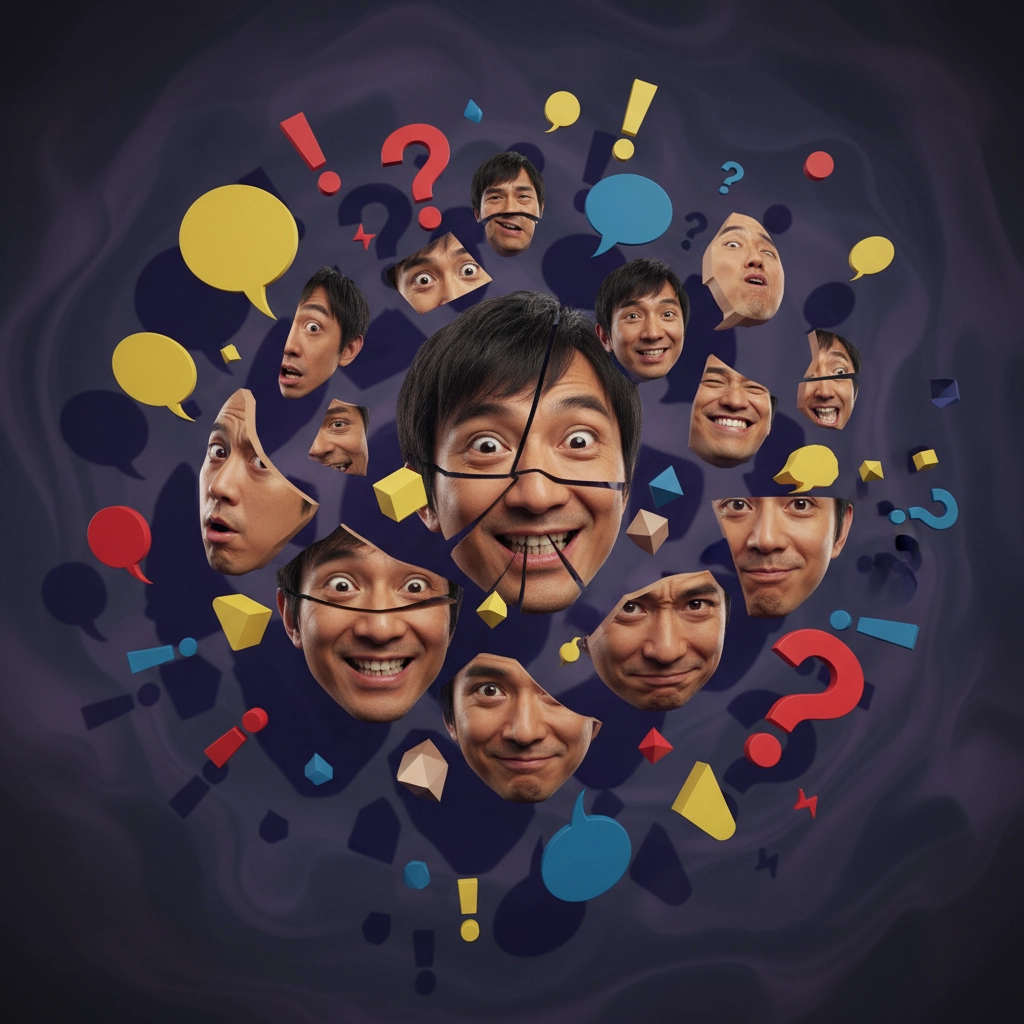
These weren't mistakes or lazy filmmaking. Chow understood that Mo Lei Tau worked best when it followed its own internal logic, however bizarre that logic might be. His films frequently featured Ming dynasty settings where characters spoke modern Cantonese slang that would never have existed historically: a deliberate anachronistic clash that became the backbone of his humour.
The Language Barrier Problem
Mo Lei Tau's genius was also its limitation. The comedy relied heavily on clever manipulation of the Cantonese language, making it largely untranslatable beyond Cantonese-speaking audiences. Compared to Western comedy films, Mo Lei Tau movies placed enormous attention on puns and Cantonese word tricks that simply didn't work in other languages.
This linguistic specificity made the humour feel intensely local, though Chow's physical comedy and visual gags helped transcend some language barriers. The style also depended on performers reacting spontaneously to Chow's absurd improvisations, creating goofy physical humour that complemented the verbal gymnastics.
For international audiences discovering Chow's work through subtitled versions, much of the wordplay was inevitably lost. Yet somehow, the sheer commitment to nonsense: combined with Chow's exceptional physical comedy skills: still managed to convey the essence of Mo Lei Tau's anarchic spirit.
Peak Nonsense: The Essential Films
Chow's Mo Lei Tau period produced several classics that defined not just his career, but Hong Kong cinema itself. SHAOLIN SOCCER and KUNG FU HUSTLE became international breakouts, introducing global audiences to his unique brand of comedy whilst maintaining the core Mo Lei Tau elements that made him famous domestically.

Earlier films like GOD OF GAMBLERS, ALL FOR THE WINNER, and FIGHT BACK TO SCHOOL showcased pure Mo Lei Tau in its most undiluted form. These weren't just comedies: they were cultural events that Hong Kong households consumed as essential entertainment, becoming as ubiquitous as television dramas.
THE GOD OF COOKERY marked a crucial evolution in Chow's approach. Recognising that overexposure had begun to diminish his impact, he strategically shifted away from pure Mo Lei Tau toward more organised verbal humour and carefully choreographed slapstick. This demonstrated his growth as a filmmaker who understood the need to balance artistic integrity with commercial appeal.
Cultural Impact Beyond Cinema
By the mid-1990s, Mo Lei Tau had become integral to Hong Kong's popular culture and identity. Chow's comedic language entered everyday conversation, with his catchphrases and delivery style becoming part of the territory's cultural DNA. The style represented more than entertainment: it captured Hong Kong's postmodern cultural moment, offering audiences a defiant, contradictory persona that resonated with their own experiences.
The impact extended beyond Hong Kong's borders, influencing comedy filmmaking throughout Asia. While Mo Lei Tau usage in other Asian cinema remained sporadic, Chow's mastery established him as Hong Kong's acknowledged "King of Comedy," creating a template that other filmmakers would reference and adapt for decades.
His influence can be seen in everything from subsequent Hong Kong comedies to anime and even Western films that embrace deliberate absurdity as a storytelling device. The idea that comedy could completely abandon conventional logic whilst maintaining emotional resonance became part of cinema's expanded vocabulary.
The Legacy of Logical Illogic
Stephen Chow's contribution to cinema extends far beyond making people laugh. He proved that comedy could be intellectually ambitious whilst remaining accessible, that nonsense could be meaningful, and that local cultural specificity could still achieve universal appeal.
Mo Lei Tau comedy secrets weren't really secrets at all: they were hiding in plain sight, in Chow's willingness to commit completely to absurdity whilst never losing sight of character development and emotional truth. His films work because underneath all the nonsense, they're fundamentally about human connection, personal growth, and the universal desire to belong.
Today, decades after his Mo Lei Tau peak, Stephen Chow's influence continues to ripple through Asian cinema and beyond. His approach to comedy: fearlessly illogical yet emotionally grounded: remains a masterclass in how to balance commercial entertainment with artistic innovation.
For film collectors and comedy enthusiasts, Chow's work represents essential viewing that captures a unique moment in cinema history when one comedian's vision changed an entire industry's approach to humour. The nonsense made perfect sense, and cinema was never quite the same again.
Explore more essential Asian cinema titles in the Terracotta Distribution Stephen Chow collection, where comedy classics meet boutique presentation.